The three things that decide it
- Water source
- Clean supply water gives the most options. Water from a floor drain backup, sewer line or outside flooding usually means porous materials come out.
- Time wet
- Materials that are dried within a day or two often survive. After several days, swelling, delamination and mold growth narrow the choices.
- Material
- Concrete, solid wood framing and tile dry well. Particleboard, carpet pad and fiberglass batts behind drywall generally do not.
Drying in place versus removing
| Usually dried in place (clean water, caught early) | Usually removed |
|---|---|
| Carpet that was floated and extracted, if the pad is replaced | Carpet pad soaked through, especially if it sat more than a day |
| Painted drywall wet only along the bottom few inches | Drywall with insulation behind it on exterior foundation walls |
| Wood studs and bottom plates | Particleboard or MDF cabinet boxes and vanity bases |
| Concrete slab under the flooring | Laminate flooring with swollen edges |
| Solid wood doors and casing | Anything touched by sewage or floodwater |
Common basement materials and what to expect
- Material
- Carpet pad
- Why it matters
- Acts like a sponge and is hard to dry in place.
- What to ask
- Will the pad be replaced while the carpet is saved?
- Material
- Drywall on foundation walls
- Why it matters
- Many Parker basements have insulation batts behind drywall on the concrete walls, which hold water out of sight.
- What to ask
- Will you check the cavity, and how much drywall comes off: a flood cut or the full sheet?
- Material
- Drywall on interior partitions
- Why it matters
- No insulation, so drilling holes or removing baseboard often lets the cavity dry.
- What to ask
- Can this wall be dried with cavity ventilation instead of cut out?
- Material
- Laminate and engineered flooring
- Why it matters
- Fiberboard cores swell and do not shrink back.
- What to ask
- Is any of it salvageable, or should I keep a sample piece for matching?
- Material
- Wet bar or bathroom vanity
- Why it matters
- Particleboard bases swell at the toe kick.
- What to ask
- Can the countertop be saved if the base is replaced?
- Material
- Floating subfloor or sleepers
- Why it matters
- Some finished basements have wood framing over the slab, which traps water.
- What to ask
- How will you dry the space under the subfloor?
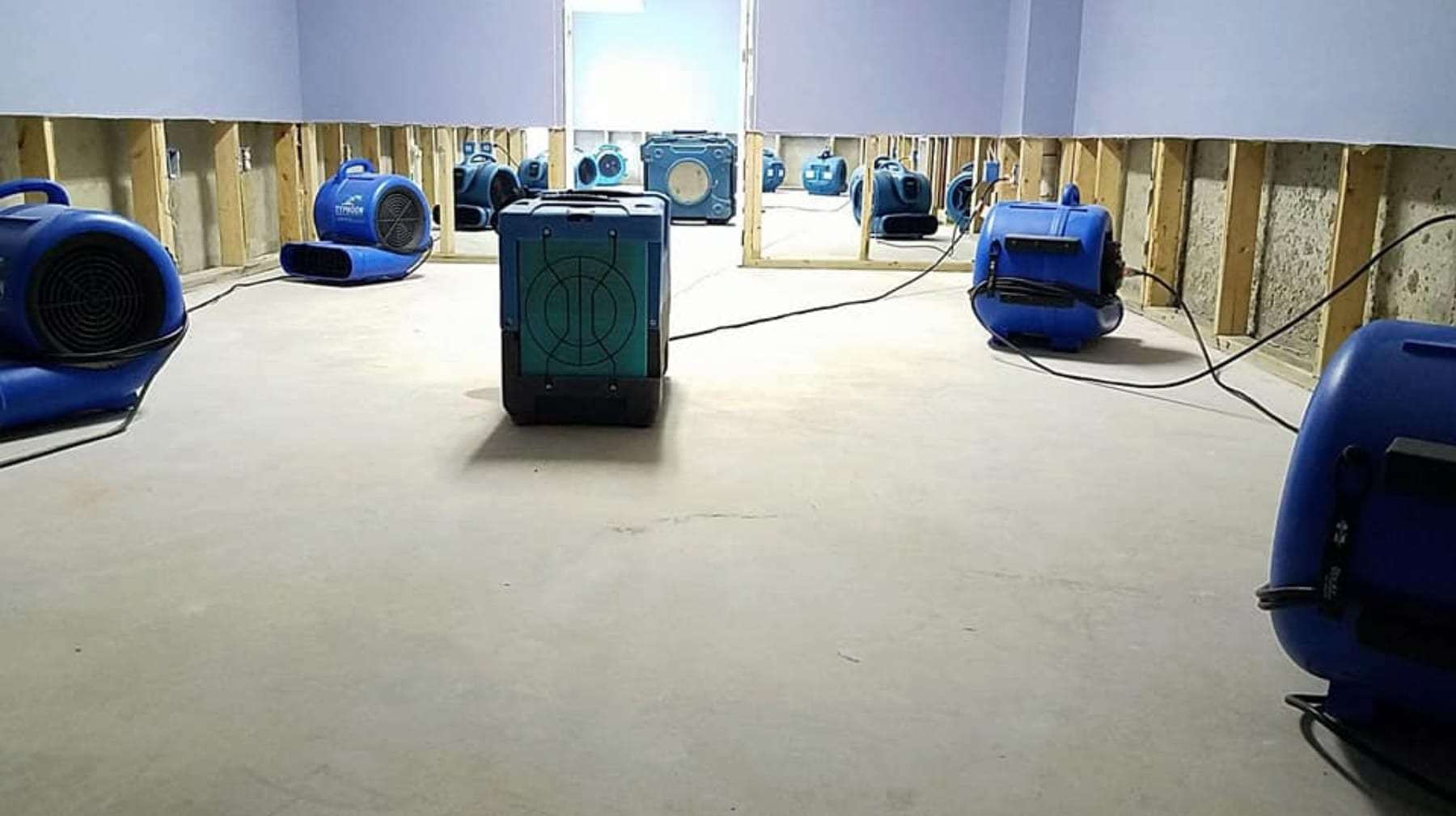
Room with flood-cut drywall drying with air movers and a dehumidifier. This photo illustrates the topic and is not from any address mentioned on this page.
Why the exterior walls are the tricky part
A finished basement wall on the foundation side is usually a framed wall set slightly away from the concrete, with fiberglass insulation in the cavity and drywall over it. When water reaches the floor, the insulation wicks it up and holds it against the concrete where no fan can reach. The drywall may look dry within a day while the cavity behind it stays wet for weeks.
That is why restorers often cut drywall a couple of feet above the floor on exterior walls, pull the wet insulation, and leave interior partition walls intact. It looks drastic, but it is often the difference between drying in days and opening the wall again months later because of a musty smell.
If your basement was finished by a previous owner, ask the restorer to note what they find inside the walls. Unpermitted finishes sometimes hide things worth knowing about, such as missing vapor control or electrical boxes below the likely water line.
Before anything is cut or hauled away
- Photograph each wall and floor area before demolition and again after.
- Ask for a moisture map or readings that justify each removal.
- Keep a small sample of carpet, pad, laminate and baseboard for your adjuster.
- Ask whether your insurer wants to see the damaged materials before disposal.
- Confirm in writing who is responsible for rebuilding after drying.
General information for Parker, not a quote or professional advice. In an emergency, call 911.