Flooring is usually the first thing water reaches and the last thing to dry, because it sits on top of a subfloor or slab that is also wet. The floor covering matters, but so does what is under it. A floating floor over foam underlayment traps water out of sight. Glue-down products hold water against the slab. Carpet over pad acts like a sponge that can be pressed out.
The general rule is that solid materials can often be dried, while products with fiberboard or particleboard cores swell permanently. Time matters for all of them.
Flooring types and what to expect
- Flooring
- Carpet over pad
- How it reacts
- Carpet tolerates clean water; pad soaks and holds it
- Can it usually be dried?
- Carpet often yes with prompt extraction; pad usually replaced
- Flooring
- Solid hardwood
- How it reacts
- Boards cup (edges rise) as they absorb water from below, then may crown if sanded too early
- Can it usually be dried?
- Often yes with specialized floor-drying mats and patience
- Flooring
- Engineered wood
- How it reacts
- Thin wood veneer over plywood or fiberboard layers; layers may separate
- Can it usually be dried?
- Sometimes; depends on core type and how long it was wet
- Flooring
- Laminate
- How it reacts
- Fiberboard core swells at the joints and does not recover
- Can it usually be dried?
- Rarely once edges have swollen
- Flooring
- Luxury vinyl plank (LVP)
- How it reacts
- The plank itself is water-resistant, but water gets under it through seams
- Can it usually be dried?
- Planks can sometimes be lifted, the floor dried, and reinstalled
- Flooring
- Tile
- How it reacts
- Tile itself is unharmed; grout and the substrate beneath can hold water
- Can it usually be dried?
- Usually yes; check the subfloor and adjoining walls
Common mistakes versus better moves
| Mistake | Better move |
|---|---|
| Leaving wet area rugs on top of hardwood | Lift rugs immediately and dry both separately |
| Sanding cupped hardwood right away | Wait for moisture readings to return to normal; boards may flatten |
| Assuming waterproof LVP means a dry subfloor | Pull a few planks at the low point to check underneath |
| Running a heater full blast to dry hardwood fast | Use controlled drying; overheating can crack and gap boards |
| Throwing out all flooring before anyone documents it | Photograph, measure and keep samples for matching and the claim |
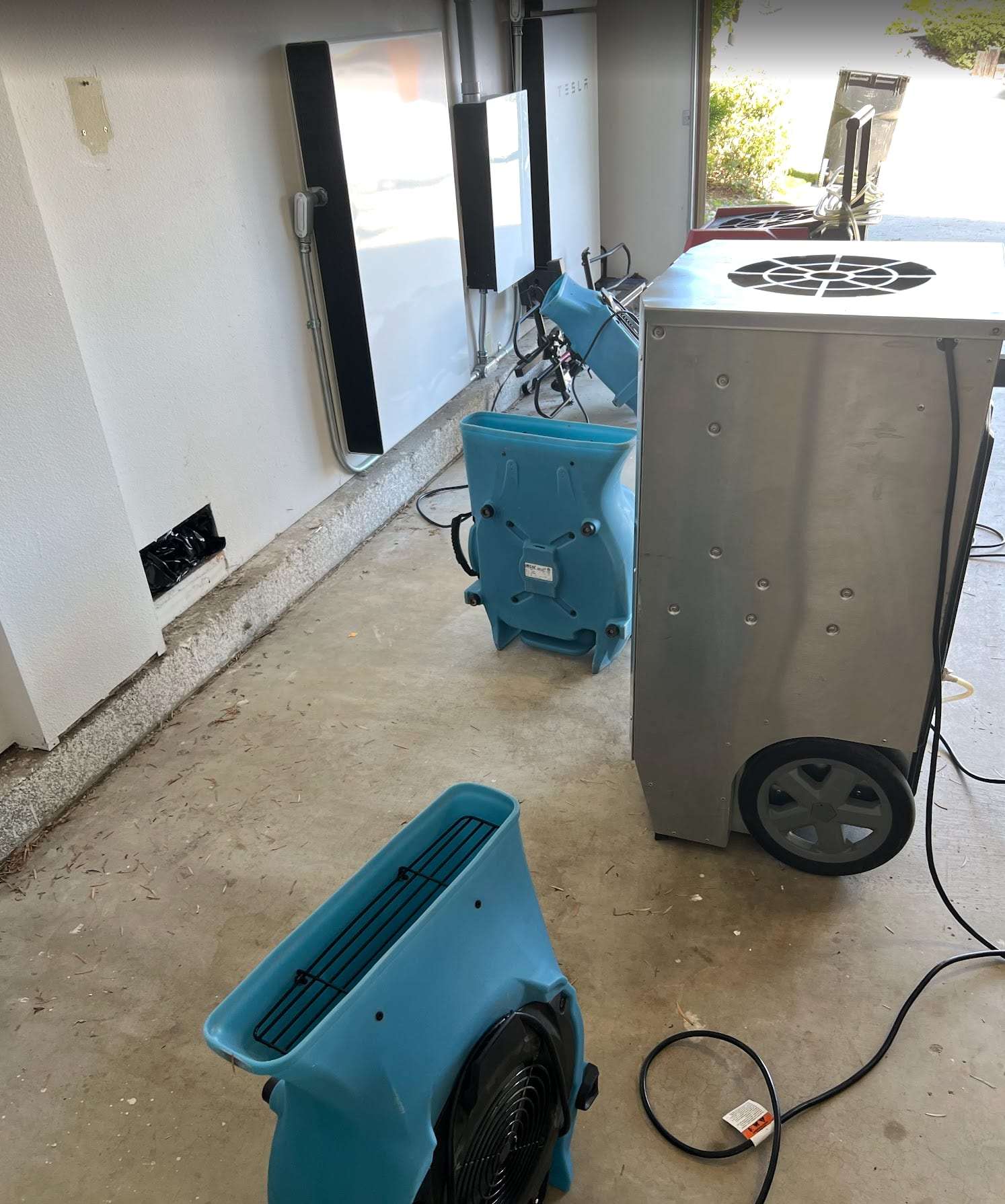
Garage drying setup with air movers and a dehumidifier. Used to illustrate this step; it is not a photo of a job connected to this site.
Questions to settle before replacing flooring
- Has the subfloor or slab been measured dry, not just the surface?
- Is the flooring continuous into rooms that were not wet? Matching new to old may require replacing more than the wet area.
- Is there a leftover box of the original flooring in the garage or basement?
- Does the replacement need an acclimation period before installation?
- If the home is in an HOA or a condo, are there flooring rules such as sound underlayment requirements?
Common questions
Why does the insurer want to replace only part of my floor?
Policies differ on matching. Some cover only the damaged area, others consider whether a reasonable match is possible. Ask your adjuster how your policy handles continuous flooring before work starts.
General information for Parker, not a quote or professional advice. In an emergency, call 911.