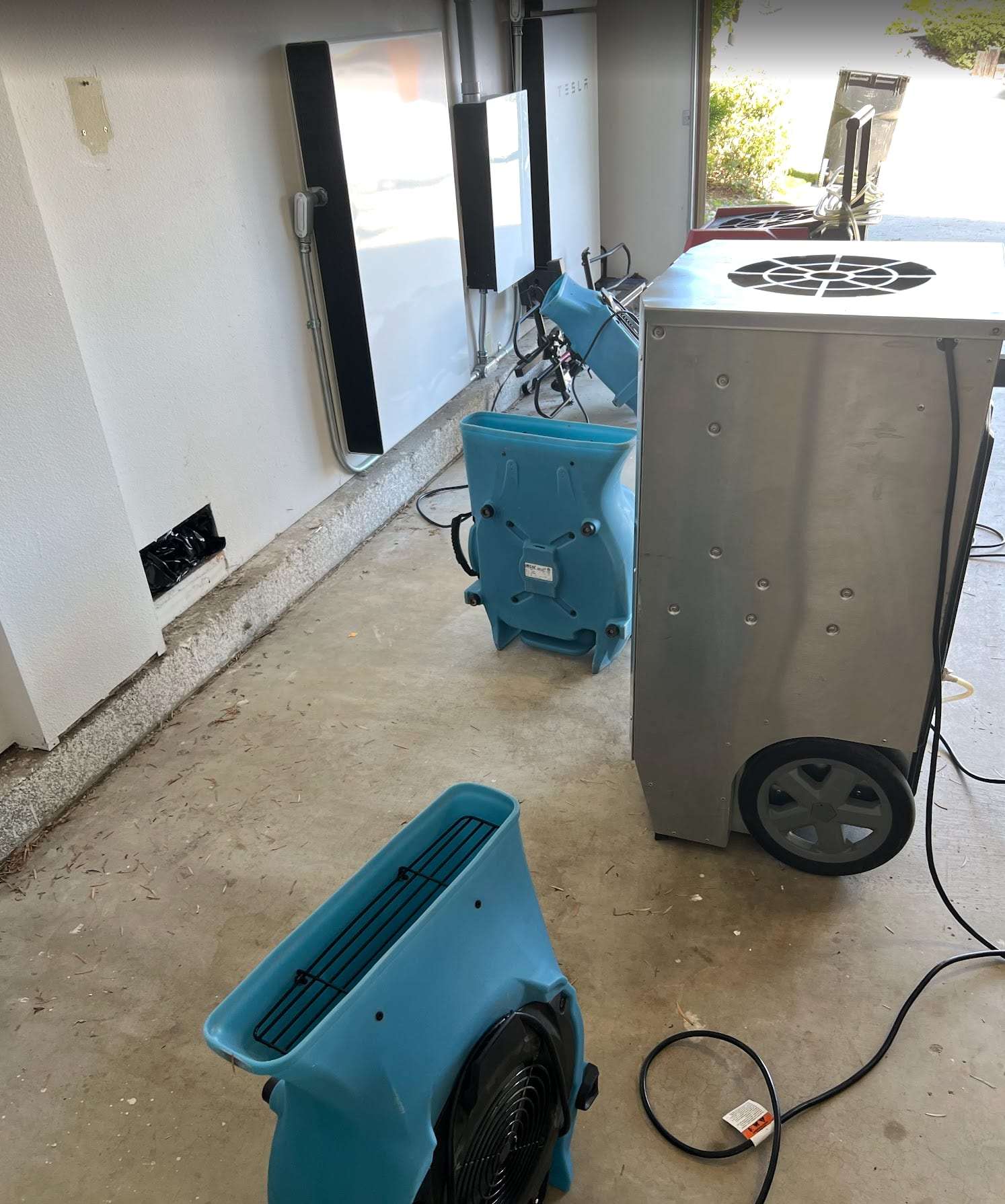
Garage drying setup with air movers and a dehumidifier. A general example of this kind of work, not a photo of a particular home, business or job.
Dry is a number, not a feeling
Every material holds some moisture even when it is in good condition. The goal of structural drying is to bring wet materials back to the level of similar, unaffected materials in the same house. A technician takes a reading from a dry wall or floor area, called the dry standard or dry reference, and compares the wet areas to it each day.
Colorado's low outdoor humidity helps. Air in Parker is usually drier than in most of the country, so evaporation from wet surfaces starts quickly and dehumidifiers have less work to do. But dry air doesn't reach the inside of a wall cavity, the core of a stud, or the layer of pad under a carpet. Those still need airflow directed at them, dehumidification in the room, and sometimes holes or removed baseboards to let moisture escape.
Basements are the slow part. Cool concrete and cool air slow evaporation, which is why restorers often set up more dehumidification below grade than upstairs, and why basement drying can take longer even in a dry climate.
What gets measured
- Material moisture
- Pin meters push into wood or drywall; pinless meters read through the surface. Readings are compared to the dry reference for the same material.
- Air conditions
- Temperature and relative humidity in the affected room and outside, used to judge whether the equipment is removing moisture.
- Dehumidifier output
- The air coming out of a working dehumidifier should be noticeably drier than the air going in.
- Thermal images
- Infrared cameras show temperature differences that can point to wet areas. They suggest where to measure; they do not prove moisture by themselves.
What a well-run drying job looks like day to day
Day 1 readings
Wet areas are mapped and marked, a dry reference is recorded, and equipment placement is noted.
Daily visits
Readings are retaken at the same spots. Equipment is moved or removed as areas dry.
Adjustments
If a spot stops improving, it usually means water is trapped. Expect a decision to open the wall or lift flooring.
Final readings
All marked points reach the dry reference, and equipment is removed only after that is documented.
Ask for these before the equipment leaves
- Can I have a copy of the moisture map and every day's readings?
- What dry reference did you use for each material?
- Were any areas left that did not reach the reference, and why?
- Did you check inside wall cavities and under cabinets, or only surfaces?
General information for Parker, not a quote or professional advice. In an emergency, call 911.